
Kanawa Island vs Gili Trawangan: Which Is Best for Couples?
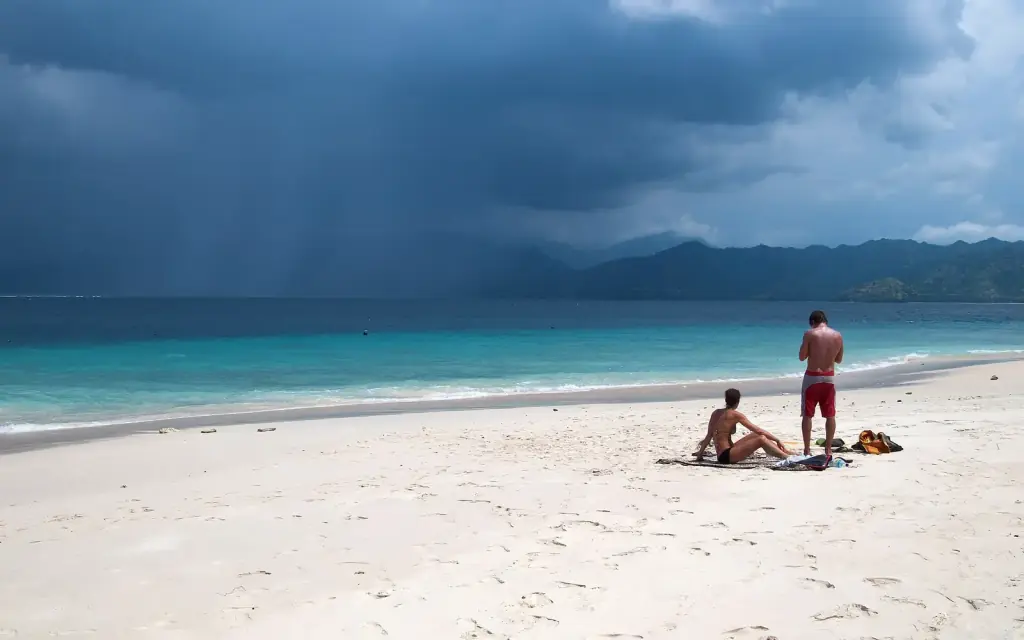 Photo: Vyacheslav Argenberg / Wikimedia Commons (CC BY 4.0)
Updated: August 2026
- Pristine Marine Sanctuary: Located just outside the boundary of Komodo National Park, its house reef is a world-class aquarium.
- Atmosphere of Serenity: Kanawa offers a private, tranquil escape, starkly contrasting Gili T’s vibrant, and often crowded, party scene.
- Epic Wildlife Access: It serves as a premier launchpad for encountering Komodo dragons and majestic manta rays.
The gentle hum of the twin outboards recedes, replaced by the sound of water lapping against the weathered hull of a traditional phinisi. The air, thick with the scent of salt and dry earth, carries a faint whisper of frangipani from the shore. You adjust your sunglasses, the Indonesian sun warming your skin, and face a choice that defines an entire journey. Before you lie two visions of paradise, two islands that have captured the imagination of travelers for decades. On one hand, the spirited, bohemian rhythm of Gili Trawangan; on the other, the profound, resonant silence of Kanawa Island. For a couple traveling through this archipelago, the decision is not merely geographical—it is a choice between two entirely different states of being.
The Vibe: Secluded Sanctuary vs. Bohemian Bustle
The fundamental difference in the Kanawa Island vs Gili Trawangan debate is one of energy. Arriving at Kanawa, a mere 11–15 kilometer boat journey from the burgeoning port of Labuan Bajo, feels like a deliberate turning down of the world’s volume. The island, a petite 32-hectare jewel, operates on a rhythm dictated by the sun and tides. There is a single, understated resort fronted by a white-sand beach that meets impossibly turquoise water, and little else. The luxury here is not in opulence but in absence: the absence of crowds, of traffic (there are no roads), of the incessant need for choice. A day on Kanawa Island is measured in chapters of a book, in the number of sea turtle sightings from your bungalow’s porch, in the slow ascent to the island’s central hill for a sunset that bleeds across the Flores Sea, silhouetting the dragon-like contours of Rinca and Komodo in the distance. It is an environment designed for connection—not with a social scene, but with your partner and the raw, powerful nature that envelops you.
Gili Trawangan, by contrast, thrives on a vibrant, communal energy. Located off the northwest coast of Lombok, it is the largest and most developed of the three Gili Islands. Its pulse is the thrum of reggae from a beachfront bar, the jingle of bells on the cidomos (horse-drawn carts) that serve as the island’s taxis, and the cheerful cacophony of its busy night market. While Gili T certainly hosts its share of exquisite private villas and five-star resorts, the island’s foundational DNA is social and celebratory. It is a place of full-moon parties that last until dawn, of yoga shalas filled with international nomads, and of a main beach road lined with more than 100 bars and restaurants. For some couples, this constant stimulation is precisely the appeal. But for those seeking a retreat from the world, the energy, however charming, can feel pervasive. The choice is stark: the profound quiet of a private sanctuary or the electric hum of a bohemian collective.
Under the Surface: A Tale of Two Reefs
For any discerning traveler to Indonesia, the world beneath the waves is as important as the one above. It is here that Kanawa Island establishes its undeniable dominance. The island sits within the protected buffer zone of the Komodo National Park, a UNESCO World Heritage site since 1991 and one of the New 7 Wonders of Nature. This designation is not merely ceremonial; it represents a globally significant commitment to conservation. The result is a marine ecosystem of staggering health and diversity, accessible directly from Kanawa’s white-sand beach. One doesn’t need a boat or a guide; you simply don your mask and fins and step into a world of pristine coral gardens. Within minutes, you are swimming alongside hawksbill turtles, observing juvenile blacktip reef sharks patrol the sandy flats, and spotting the elusive, jewel-toned mandarinfish performing their evening mating dance. Underwater visibility commonly runs 20–25 metres through the April–October dry season, enough to read the whole reef slope from the surface.
Gili Trawangan also offers compelling underwater experiences, and it would be disingenuous to suggest otherwise. Its famed Turtle Point, on the island’s northern side, almost guarantees encounters with green sea turtles. The island is ringed by dive sites, including the popular Shark Point and the eerie Wreck of the Bounty. However, decades of high-volume tourism—with visitor numbers exceeding 1.2 million annually before 2020—have inevitably left their mark. While commendable coral restoration projects like the Gili Eco Trust are working to mitigate the damage, areas of the reef show signs of stress and bleaching. The diving is pleasant, accessible, and perfect for beginners, but it lacks the sheer scale, pristine condition, and thrilling unpredictability of the waters around Komodo. The comparison is one of good versus truly exceptional. Snorkeling on Gili T is an activity; snorkeling on Kanawa is an immersion in a world-class natural wonder.
Accommodation and Exclusivity: The Private Estate vs. The Populous Resort
The philosophy of a destination is often best expressed through its architecture and approach to hospitality. On Kanawa, the experience is curated to feel like a stay at a private, secluded estate. The number of bungalows is intentionally limited, ensuring the island never feels crowded. The design ethos favors natural materials—weathered teak, alang-alang grass roofs, cool stone floors—that blend seamlessly into the landscape rather than imposing upon it. The luxury is subtle and service-oriented. It’s the fresh coconut water that appears by your sun lounger without you asking, the staff who know your name by the second day, the feeling that you are a guest in a cherished home, not a customer in a hotel. This curated scarcity creates an atmosphere of profound exclusivity. Even when experienced as the best day trip from Labuan Bajo, the island imparts a sense of having discovered a secret that the rest of the world has yet to find.
Gili Trawangan, in line with its more democratic and energetic vibe, presents a broad spectrum of accommodation. You can find everything from a $30-a-night backpacker homestay to a $1,000-a-night multi-bedroom villa with a private chef. Luxury properties like Hotel Ombak Sunset or Ponte Villas offer impeccable service, private pools, and high-end amenities. Yet, the island’s geography means that even in the most secluded villa, you are never truly far from the main thoroughfare. The island’s infrastructure, supporting a permanent population of around 1,500 and thousands more visitors, can feel strained. The promise of privacy on Gili T is often a bubble within a much larger, more chaotic system. For couples for whom true luxury is defined by space, silence, and a genuine sense of escape, the singular, boutique nature of Kanawa Island offers an experience that a more developed island, regardless of its high-end options, simply cannot replicate.
The Culinary Journey: Curated Perfection vs. Abundant Choice
A romantic getaway is often defined by its memorable meals, and here again, the two islands offer opposing philosophies. Dining on Kanawa is an exercise in curated perfection. The menu is not encyclopedic; it is a focused celebration of the region’s bounty. The experience is about a single, perfect dish rather than a hundred options. Imagine a dinner set on the beach, the table lit by oil lanterns, your feet in the sand. The main course is a red snapper, caught by a local fisherman just hours before, grilled simply over coconut husks to impart a subtle, smoky flavor, and served with a spicy sambal matah and steamed rice. The wine list might be small but thoughtfully chosen, perhaps featuring a crisp, surprising white from a boutique Balinese vineyard. The focus is on freshness, locality, and intimacy. It’s a culinary experience that complements the island’s serene atmosphere—uncomplicated, authentic, and of exceptional quality. It’s less about what you want to eat and more about surrendering to a perfectly executed vision of what you should eat, right here, right now.
Gili Trawangan’s culinary landscape is a vibrant, sprawling buffet. Its strength lies in its sheer variety. Along the main strip and into the island’s interior, a couple can find almost anything their hearts desire. Craving authentic Neapolitan pizza from a wood-fired oven? You can find it. A sophisticated Japanese tasting menu? That too. A cheap and cheerful plate of nasi goreng from the busy night market for under $3? Absolutely. This diversity is a major draw, offering a different culinary adventure every night. You can dine at a different restaurant for two weeks and never repeat. However, this abundance can also lead to a paradox of choice, and the quality can be inconsistent. The dining experience is often more transactional and less personal. Gili Trawangan offers a choice of kitchens; Kanawa offers whatever the boat brought, and a beach with nobody selling anything on it.
Beyond the Beach: Epic Adventures vs. Island Recreations
When you finally stir from your sun-drenched reverie, the activities available to you further delineate the islands’ characters. From Kanawa Island, the adventures are elemental and grand in scale, leveraging its strategic location at the gateway to Komodo National Park. A couple can charter a private speedboat for a day, cruising to Rinca Island, just 25 kilometers away, to walk among the formidable Komodo dragons in their natural habitat—a truly primeval experience. Another day might be spent at Manta Point, a legendary dive site where gentle giants with wingspans of up to 5 meters congregate at cleaning stations. Or perhaps a challenging hike up Padar Island for one of the most iconic views in all of Indonesia. These are not mere activities; they are expeditions, bucket-list encounters with a wildness that is becoming increasingly rare in the world. The proximity to these wonders is Kanawa Island’s ultimate trump card.
Activities on Gili Trawangan are more centered around recreation and island life. The classic Gili T activity is to rent a pair of bicycles and circumnavigate the 7.5-kilometer circumference of the island, a leisurely 90-minute pedal that takes you past beach clubs, quiet stretches of sand, and the obligatory sunset swings that have become Instagram famous. The days can be filled with stand-up paddleboarding, surf lessons on the southern breaks, PADI certification courses, or joining a group snorkeling trip that hops between the three Gili islands. There are also excellent yoga studios and Indonesian cooking classes. These are all wonderful, enjoyable ways to spend a holiday. They are fun, accessible, and social. But they lack the profound, awe-inspiring quality of the experiences on offer from Kanawa. As noted by Indonesia’s official tourism authority, indonesia.travel, the Gilis are about “tropical escape,” while Komodo is about “adventure with the dragons.”
Quick FAQ: Kanawa Island vs Gili Trawangan
Is Kanawa Island or Gili Trawangan better for a honeymoon?
For couples prioritizing privacy, snorkeling directly from the beach, and unique wildlife encounters like Komodo dragons, Kanawa Island is unequivocally the superior choice for a honeymoon. For a more social, high-energy honeymoon with extensive dining choices and nightlife, Gili Trawangan would be a better fit.
How do you get to each island?
Kanawa Island is reached from the port of Labuan Bajo on the island of Flores in about 20–35 minutes by speedboat, or 45–75 minutes on a wooden day boat. Labuan Bajo (LBJ) has a modern airport with multiple daily flights from Bali (DPS) and Jakarta (CGK). Gili Trawangan is most commonly reached by a 90- to 120-minute fast boat from various ports in Bali, or a much shorter 15-minute boat trip from Bangsal Harbour in Lombok.
Is the diving really that different?
Yes, the difference is significant. Kanawa provides access to the world-renowned, current-rich dive sites of Komodo National Park, famous for large pelagic species like manta rays, sharks, and vast schools of fish. It’s considered an advanced diving destination. Gili Trawangan offers calmer, reef-based diving that is excellent for beginners and certification courses, with a high concentration of sea turtles but less overall biodiversity and fewer large animals.
What about the overall cost for a luxury stay?
While Gili Trawangan has a wider range of accommodations, including many budget-friendly options, the price for a true luxury villa or resort experience is comparable on both islands. However, given the exclusivity, pristine environment, and access to a UNESCO World Heritage site, the value proposition for a premium stay on Kanawa Island is arguably much higher for the discerning traveler.
In the end, the choice between Kanawa Island and Gili Trawangan is a reflection of a couple’s travel desires. Gili Trawangan offers a vibrant, sun-drenched kaleidoscope of experiences—a place of endless choice, social connection, and playful energy. It is a fantastic destination. But for the couple whose definition of luxury is rooted not in abundance but in rarity—the rare luxury of silence, of a pristine reef all to yourselves, of a night sky unpolluted by light, and of encounters with a truly wild world—the answer is, and will always be, Kanawa. It is more than an island; it is a sanctuary, a reminder of what paradise felt like before the world arrived. The raw, profound beauty of Flores is waiting. We invite you to discover the singular experience of Kanawa Island.
Plan Your Kanawa Island Visit
Couples’ Micro-Choices: Detailed Kanawa vs Gili Insights
Is Kanawa Island or Gili Trawangan better for couples who want quiet time together?
If you’re choosing Kanawa Island for couples time, expect long, quiet stretches with almost no outside stimulation: basic bungalows and a house reef you can swim to from shore. Even in high season it rarely feels busy. Gili Trawangan, by contrast, has constant movement—music, night markets, boat traffic. You can find pockets of calm there, especially on the north and west coasts, but the island’s social energy is always nearby. Kanawa suits couples who recharge in silence; Gili T fits those who like options.
How does Kanawa’s hill hike compare to Gili Trawangan and Gili Lawa for panoramic views?
For hiking and panoramic views, Gili Lawa clearly wins on drama: longer ridgelines, steeper slopes and sweeping views over several bays. However, its trails are hotter, more exposed, and better suited to reasonably fit hikers. Kanawa’s hill is a short, direct climb from the beach—no guide needed, sturdy sandals are enough. Gili Trawangan’s hill is intermediate: a bit longer than Kanawa, with partial shade and views over Lombok. For couples, Kanawa is the easiest “sunset stroll,” Gili Lawa the big trek.
How difficult and safe is the trekking on Kanawa Island vs Gili Lawa?
On difficulty and safety, Kanawa offers a straightforward dirt path up a single hill, usually 10–20 minutes each way; Gili Lawa asks considerably more. It’s steep in sections but non-technical; you just need closed shoes, water, and to avoid midday heat. Gili Lawa’s trails are longer, steeper, and fully exposed. Dry grass can be slippery, and occasional falls happen, especially on rushed sunrise descents. In Komodo, always follow your guide’s instructions on where to walk and bring more water than you think you’ll need.
Which is better for sunrise and sunset views: Kanawa Island, Gili Trawangan, or Gili Lawa?
For sunrise, Gili Lawa is the spectacular one: high ridges with views all round, where the sun lifts over a maze of islets. It’s a classic Komodo “wow” moment but requires a boat, an early start, and a guided trek. Kanawa’s hill faces a wide western horizon—sunsets over Rinca and Komodo are its strong point, with soft pre-dawn light on the opposite side. Gili Trawangan gives you big sunsets over Bali’s Agung; sunrise is less dramatic unless you climb the hill and look toward Lombok.
Is Kanawa Island or Gili Lawa better for drone photography?
For drone photography, the choice between the two comes down to subject and logistics. Kanawa gives you tight compositions: a small, pale-sand island ringed by turquoise shallows and a visible reef drop-off, plus moored boats. Gili Lawa offers more dramatic topography—serrated ridges and deep bays—but flights are usually brief, squeezed between trekking groups and park rules. In Komodo, always ask your licensed boat operator about current drone permissions; regulations and local sensitivities can change without much notice.
What condition is the coral at Kanawa in now?
The picture is mixed but still rewarding. Shallow areas near where the jetty once stood show clear past damage from trampling, anchors, and beginner fins. However, swim a little further along the reef flat and out to the drop-off and you’ll still find healthy hard corals, soft corals, and schooling fish. Visibility remains excellent in the dry season. The trend now is cautious: good sites remain, but they depend heavily on continued reef protection and on visitor behaviour.
How can couples help with Kanawa Island coral damage prevention when snorkeling?
On Kanawa, coral damage is often caused by very simple mistakes. Enter the water via the sandy patches on the main arrival beach, then float out—don’t stand on the reef flat, even if it’s shallow. Keep your fins below the surface and away from coral heads, and avoid chasing turtles or rays. Use a long-sleeved rash guard instead of relying on sunscreen, and if you must apply sunscreen, do it well before entering the sea. Consider choosing a licensed trip operator who actively briefs guests on reef etiquette and enforces no-touch rules.
Are there any bars or places to buy alcohol on Kanawa Island?
People often ask about a “kanawa island bar,” but facilities change. Historically, the small resort has run a simple beach bar serving basic drinks, sometimes including beer or simple cocktails. Because operations have been on-and-off, you should not rely on this being open or well stocked. There are no shops or minimarkets on the island, and you can’t bring alcohol from Labuan Bajo on some boats, depending on the operator’s rules. Confirm with your boat or resort before you travel, and don’t expect Gili-style nightlife.
Are there restaurants or warungs on Kanawa Island, or should we bring food?
There are no independent warungs on Kanawa. When the resort kitchen is operating, it usually offers a simple fixed or short-order menu—think basic Indonesian dishes and a few Western options, often served at set times. Because electricity, water, and supplies can be inconsistent, it’s wise to bring snacks, extra drinking water, and anything you “can’t do without” for a day. If you join a day trip, food is typically provided on board; check your inclusion list carefully when booking with your Labuan Bajo operator.
Should couples stay at a Kanawa Island couples resort, or visit on a day trip and sleep on a boat?
With the resort operating irregularly, couples often end up weighing a night aboard against a straightforward day trip to either island. A day trip to Kanawa plus a night anchored near Gili Lawa or another bay on a phinisi gives you reliable power, hot showers on most boats, and starry decks to yourselves. If you prefer that moving “hotel,” look at tailored luxury phinisi charters in Komodo. If the Kanawa bungalows are open when you travel, they offer an ultra-quiet, feet-in-the-sand option—but confirm status in writing before you commit.
What’s the best way for couples to combine Kanawa, Gili Lawa, and Komodo in one trip?
For couples, the smoothest approach is usually a multi-day boat itinerary that stops at Kanawa for snorkeling, Gili Lawa for a sunrise or sunset hike, and one or two dragon islands. You can join an existing shared itinerary or arrange a private route. For more control over timing—sunrise hikes, empty reefs, slow mornings together—consider arranging fully customised private Komodo trips out of Labuan Bajo and ask specifically to include Kanawa in your plan.
To turn this into an actual itinerary, contact a licensed Labuan Bajo operator with your dates and whether you prefer a one-day Kanawa visit, a quiet liveaboard, or a multi-stop honeymoon route. You can reach Komodo Luxury via WhatsApp at +62 811-3823-875 or email sales@komodoluxury.com and ask about their Komodo honeymoon cruises and flexible VIP boat charters.
Romance on Kanawa — more from the Journal
Keep reading
Kanawa Island Snorkeling Safety & Reef Etiquette
Updated: August 2026 Kanawa Island is one of the safer places to snorkel near Labuan Bajo, but “beginner-friendly” is not the same…
Travel Insurance & Health Prep for Kanawa Island
Updated: August 2026 Kanawa Island itself has no medical post, clinic or pharmacy — the nearest real medical facilities are in Labuan…
Kanawa Island Solo Travel & Female Safety Guide
Updated: August 2026 Solo travelers, including solo women, visit Kanawa Island regularly and generally find it straightforward and safe — the real…
Planning a day around Kanawa?
Komodo Luxury sits in Labuan Bajo and checks conditions the evening before and the morning of every departure. Send your dates and you get a written quote — fares, inclusions, and park fees stated separately.